Pages

Search This Blog

Showing posts with label Philippines. Show all posts

Thursday, June 12, 2014

Stamp Investment Tip: Philippines 1932 Von Gronau Flight Overprint (Scott #C36-45)


 In 1932, the Philippines, then under U.S. administration, overprinted stamps from its Scenes issue of that year for use on the round-the-world flight of Captain Wolfgang von Gronau (Scott #C36-45). 25,305 sets were issued, and Scott '14 prices the unused set at $29.- ($44.25 for NH).

   The set has potential multiple market appeal among collectors of Philippines, U.S. Possessions, Aerophilately, and in Germany, due to interest in  von Gronau. While I sometimes recommend obtaining expertization when buying overprinted stamps, this set is an exception because it's too inexpensive to fake.

As a newly democratic country of 92 million which is moving away from from its centuries-old complete dependence on agriculture, the Philippines could turn out to be one of the most successful emerging markets in the Pacific Region. The government tends toward fiscal conservatism coupled with long-term economic planning, and annual GDP growth has been around 6%-7%. Barring extreme political instability, it is likely that the Philippines will be one of the fastest growing economies over the next decades.

The Stamp Auction Bidders and Consignors Union (SABACU) is a forum for discussing stamp auctions, and represents the interests of stamp auction bidders and consignors in their dealings with stamp auctioneers. All stamp collectors and dealers are welcome to join.   


Sunday, June 24, 2012

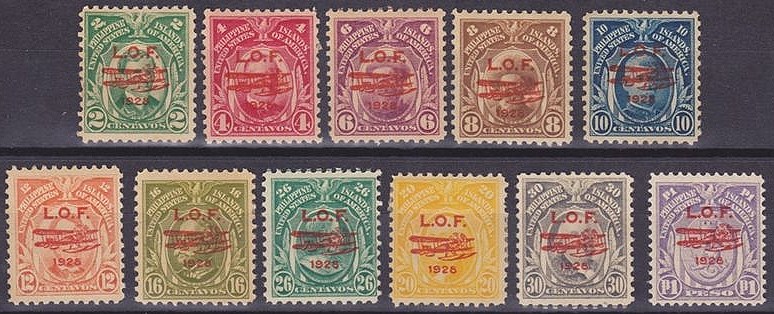
Stamp Investment Tip: Philippines 1928 London-Orient Flight Issue (Scott #C18-28)

The Philippines were under U.S. Administration from the end of the Spanish-American War (1899) until 1935. In 1928 , stamps of the Philippines regular issue of 1917-25 were overprinted "L.O.F." to commemorate the London-Orient Flight made by a squadron of British seaplanes (Scott #C18-28). The Philippines were an important staging post on all major world flights of the twenties and thirties and the definitive series was overprinted in connection with these events on six occasions between 1926 and 1936. 6,000 sets were issued, and Scott '13 prices the unused set at $136.25 ($230.- for NH) .

The set has multiple market appeal among collector of the Philippines, U.S. Possessions, and Aviation Topicalists. Though I often counsel obtaining expertization when purchasing stamps with overprints, in this case it's unnecessary, because the set is too inexpensive to warrant it, and there isn't a huge difference in value between the overprints and the basic stamps.


As a newly democratic country of 92 million which is moving away from from its centuries-old complete dependence on agriculture, the Philippines could turn out to be one of the most successful emerging markets in the Pacific Region. The government tends toward fiscal conservatism coupled with long-term economic planning, and annual GDP growth has been around 6%-7%. Barring extreme political instability, it is likely that the Philippines will be one of the fastest growing economies over the next decades.


Wednesday, January 25, 2012

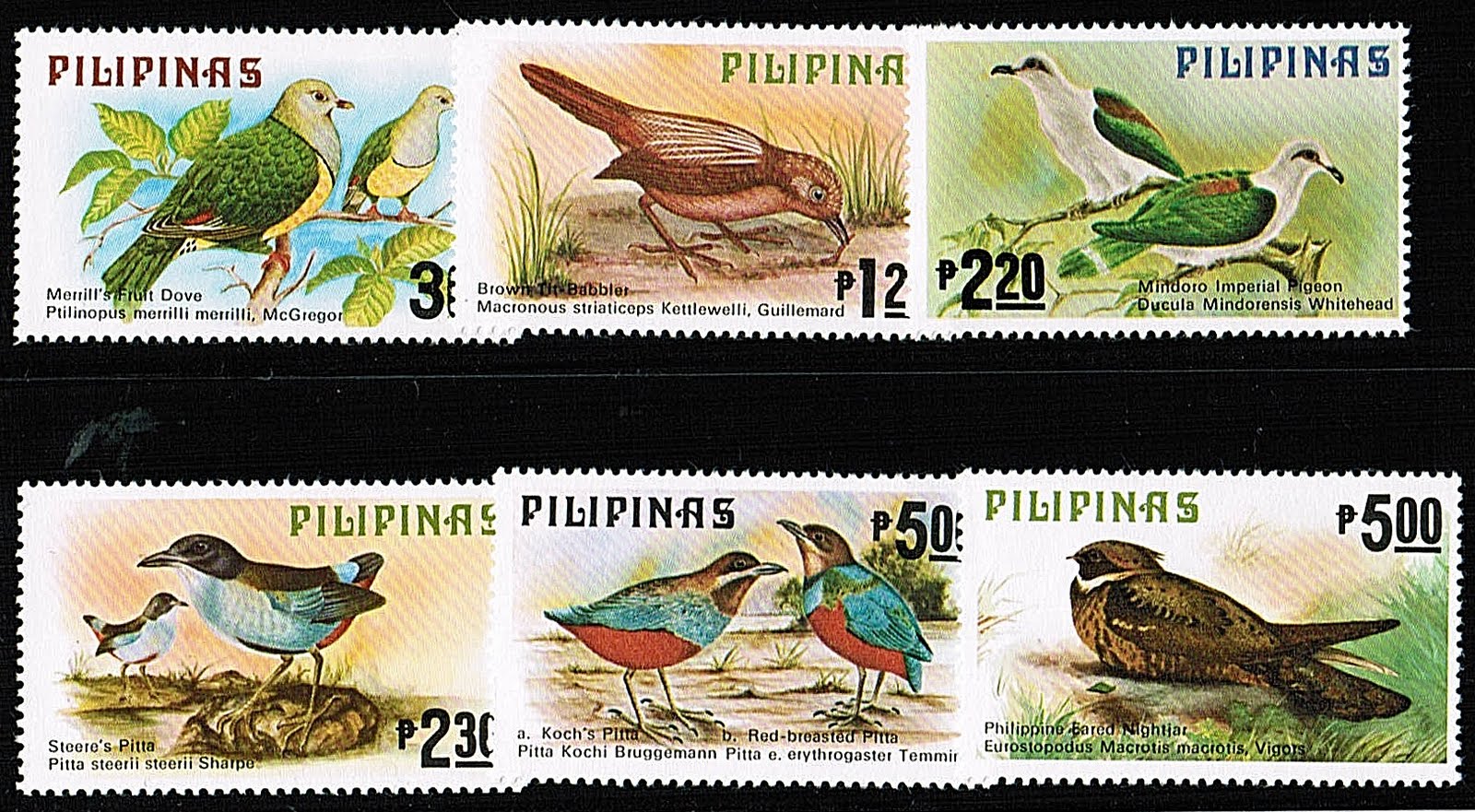
Stamp Investment Tip: Philippines 1979 Birds (Scott #1392-97)

In 1979, the Philippines issued an attractive set of stamps featuring Native Birds (Scott #1392-97). Only 50,000 sets were issued, and Scott '12 prices the unused set at $28.90. Most were probably used as postage and discarded.

From the perspective of philatelic history, the Philippines is interesting because it has issued stamps under Spanish dominion, U.S. Administration, Japanese Occupation, and as an independent nation. It is also compelling as an area of research for the philatelic investor, because of its rapid economic growth, and because it has issued a number of scarce yet overlooked issues, including some modern popular topical sets, such as the Birds set featured in this article.

As a newly democratic and newly industrialized country of 92 million which is moving away from from its centuries-old complete dependence on agriculture, the Philippines could turn out to be one of the most successful emerging markets in the Pacific Region. The government tends toward fiscal conservatism coupled with long-term economic planning, and annual GDP growth has been around 6%-7%. Barring extreme political instability, it is likely that the Philippines will be one of the fastest growing economies over the next decades.

I have begun a new blog, "The Stamp Specialist", which will feature wholesale buy prices for stamps which I am interested in purchasing. I've just posted a buy list for the Philippines, and it includes the set and souvenir sheet recommended in this article. Viewing dealers' buy lists every now and then is an excellent way to keep current on the vagaries of the stamp market.


Those interested in learning about investing in stamps should read the Guide to Philatelic Investing ($5), available on Kindle and easily accessible from any computer.


Thursday, September 22, 2011

Stamp Investment Tip: Philippines 1979 Flowers (Scott #1411-16)

In 1979, the Philippines issued a set of stamps picturing native varieties of Mussaenda flowers (Scott #1411-16).
Only 50,000 were issued, and Scott '11 prices the unused set at $10.95. It is likely that most were used as postage and discarded.


From the perspective of philatelic history, the Philippines is interesting because it has issued stamps under Spanish dominion, U.S. Administration, Japanese Occupation, and as an independent nation. It is also compelling as an area of research for the philatelic investor, because of its rapid economic growth, and because it has issued a number of scarce yet overlooked issues, including some modern popular topical sets, such as the Flower topical issue featured in this article.


As a newly democratic and newly industrialized country of 92 million which is moving away from from its centuries-old complete dependence on agriculture, the Philippines could turn out to be one of the most successful emerging markets in the Pacific Region. The government tends toward fiscal conservatism coupled with long-term economic planning, and annual GDP growth has been around 6%-7%. Barring extreme political instability, it is likely that the Philippines will be one of the fastest growing economies over the next decades.

I have begun a new blog, "The Stamp Specialist", which will feature wholesale buy prices for stamps which I am interested in purchasing. I've just posted a buy list for the Philippines, and it includes the set and souvenir sheet recommended in this article. Viewing dealers' buy lists every now and then is an excellent way to keep current on the vagaries of the stamp market. Those interested in joining a community of stamp investors, dealers, and collectors are welcome to join the "Stampselectors" group at Facebook. The group provides a useful venue for those who wish to buy, sell, and trade stamps, and discuss philatelic investing and practical aspects of stamp collecting.


Wednesday, May 18, 2011

Stamp Investment Tip: Philippines 1979 Native Animals (Scott #1403-08)

In 1979, the Philippines issued an attractive set of stamps featuring native animals (Scott #1403-08). Only 50,000 were issued, and Scott '11 prices it unused at $10.95 .


It is likely that most were used as postage and discarded.From the perspective of philatelic history, the Philippines is interesting because it has issued stamps under Spanish dominion, U.S. Administration, Japanese Occupation, and as an independent nation. It is also compelling as an area of research for the philatelic investor, because of its rapid economic growth, and because it has issued a number of scarce yet overlooked issues, including some modern popular topical sets, such as the Animals topical issue featured in this article.


As a newly democratic and newly industrialized country of 92 million which is moving away from from its centuries-old complete dependence on agriculture, the Philippines could turn out to be one of the most successful emerging markets in the Pacific Region. The government tends toward fiscal conservatism coupled with long-term economic planning, and annual GDP growth has been around 6%-7%. Barring extreme political instability, it is likely that the Philippines will be one of the fastest growing economies over the next decades.


I have begun a new blog, "The Stamp Specialist", which will feature wholesale buy prices for stamps which I am interested in purchasing. I've just posted a buy list for the Philippines, and it includes the set and souvenir sheet recommended in this article. Viewing dealers' buy lists every now and then is an excellent way to keep current on the vagaries of the stamp market.


Those interested in joining a community of stamp investors, dealers, and collectors are welcome to join the "Stampselectors" group and organization page at Facebook. These provide useful venues for those who wish to buy, sell, and trade stamps, and discuss philatelic investing and practical aspects of stamp collecting.


Thursday, April 28, 2011

Stamp Investment Tip: Philippines 1978 Fish (Scott#1379-84)

In 1978, the Philippines issued a colorful Fish set (Scott #1379-84). Only 50,000 sets were issued, and Scott '11 values the unused set at $11.00. Most were probably used as postage and discarded.


From the perspective of philatelic history, the Philippines is interesting because it has issued stamps under Spanish dominion, U.S. Administration, Japanese Occupation, and as an independent nation. It is also compelling as an area of research for the philatelic investor, because of its rapid economic growth, and because it has issued a number of scarce yet overlooked issues, including some modern popular topical sets, such as the Flora/Fauna topical issue featured in this article.


As a newly democratic and newly industrialized country of 92 million which is moving away from from its centuries-old complete dependence on agriculture, the Philippines could turn out to be one of the most successful emerging markets in the Pacific Region. The government tends toward fiscal conservatism coupled with long-term economic planning, and annual GDP growth has been around 6%-7%. Barring extreme political instability, it is likely that the Philippines will be one of the fastest growing economies over the next decades.

I have begun a new blog, "The Stamp Specialist", which will feature wholesale buy prices for stamps which I am interested in purchasing. I've just posted a buy list for the Philippines, and it includes the set and souvenir sheet recommended in this article. Viewing dealers' buy lists every now and then is an excellent way to keep current on the vagaries of the stamp market.


Those interested in joining a community of stamp investors, dealers, and collectors are welcome to join the "Stampselectors" Page at Facebook. The group provides a useful venue for those who wish to buy, sell, and trade stamps, and discuss philatelic investing and practical aspects of stamp collecting.


Tuesday, September 28, 2010

Stamp Investment Tip: Philippines 1984 Summer Olympics Issue

In 1984, the Philippines issued a set of six colorful stamps and a souvenir sheet in celebration of the Summer Olympics, held in Los Angeles (Scott # 1699-1704, 1705). 20,000 sets and 15,000 souvenir sheets were issued, and Scott '11 prices them unused at $18.00 and $15.00, respectively. Imperforate versions of the set and souvenir sheet were also issued, in quantities of 3,000 and 5,000. These are noted by Scott, which prices them at $100.00 and $50.00. The Philippines has produced imperforate versions of popular sets every now and then, and while it is certainly true that such were issued mainly to appeal to collectors and were not intended to serve as postage, they're issuance quantities are much lower than those of the regular stamps, and they are therefore worthy of consideration.


From the perspective of philatelic history, the Philippines is interesting because it has issued stamps under Spanish dominion, U.S. Administration, Japanese Occupation, and as an independent nation. It is also compelling as an area of research for the philatelic investor, because of its rapid economic growth, and because it has issued a number of scarce yet overlooked issues, including some modern popular topical sets, such as the Sports/Olympics topical issue featured in this article.


As a newly democratic and newly industrialized country of 92 million which is moving away from from its centuries-old complete dependence on agriculture, the Philippines could turn out to be one of the most successful emerging markets in the Pacific Region. The government tends toward fiscal conservatism coupled with long-term economic planning, and annual GDP growth has been around 6%-7%. Barring extreme political instability, it is likely that the Philippines will be one of the fastest growing economies over the next decades.


I have begun a new blog, "The Stamp Specialist", which will feature wholesale buy prices for stamps which I am interested in purchasing. I've just posted a buy list for the Philippines, and it includes the set and souvenir sheet recommended in this article. Viewing dealers' buy lists every now and then is an excellent way to keep current on the vagaries of the stamp market.

Those interested in joining a community of stamp investors, dealers, and collectors are welcome to join the "Stampselectors" group at Facebook. The group provides a useful venue for those who wish to buy, sell, and trade stamps, and discuss philatelic investing and practical aspects of stamp collecting.


Wednesday, April 7, 2010

Stamp Investment Tip: Philippines 1944 "Victory" Handstamps


During the Philippines Campaign of 1944-45, the Allied forces gradually liberated the islands from the Japanese. As a propaganda tactic, in 1944 crude violet "VICTORY" handstamps were applied to some earlier Philippines issues. Many of these stamps are scarce to very rare, and comprise what would be an extremely expensive compound set (Scott # 463-84, C63, E8-9, J16-22, O38-43), though it is likely that very few, if any, complete sets remain in collections. They have dual market appeal in both the Philippines and the U.S., as they were issued during a period in which the islands were technically in transition from U.S. Administration to Independence.

Fake handstamps exist, so it is necessary to purchase these stamps conditional on obtaining expertization. I've listed them, along with quantities issued (when known) and Scott '10 Catalog Values for unused, below:


1944 Violet "VICTORY" Handstamps:

-2c (on #411; Scott #463; 168; $ 325.00)
-as above, booklet pane of 6 (Scott #463a; 28; $12,500.00 )
-2c (on #461; Scott #464; 24,400; $ 10.00 )
-4c (on #384; Scott #465; 807; $ 42.50 )
-6c (on #385; Scott #466; 64; $ 3,500.00 )
-6c (on #409; Scott #467; Unknown; $ 225.00)
-6c (on #413; Scott #468; 206; $ 4,750.00)
-6c (on #453; Scott #469; 235; $ 350.00)
-6c (on #466; Scott #470; 141; $ 1,750.00)
-6c (on #459; Scott #471; Unknown; $ 275.00)
-8c (on #436; Scott #472; 1,643; $ 17.50)
-10c (on #415; Scott #473; 450; $ 300.00)
-10c (on #437; Scott #474; 358; $ 275.00)
-12c (on # 410; Scott #475; Unknown; $ 1,100.00)
-12c (on #454; Scott #476; 36; $ 6,000.00)
-12c (on #460; Scott #477; Unknown; $ 375.00)
-16c (on #389; Scott #478; 122; $ 2,250.00)
-16c (on #417; Scott #479; 200; $ 1,250.00)
-16c (on #439; Scott #480; 500; $500.00)
-20c (on #440; Scott #481; 1,401; $ 110.00)
-30c (on #420; Scott #482; 248;$ 350.00 )
-30c (on #442; Scott #483; 200; $ 750.00)
-1p (on #443; Scott #484; 21; $ 6,250.00)

Airmail:

-4c Rose Carmine (Scott #C63; 122; $ 3,750.00)

Special Delivery:


-20c Dull Violet (on #E5b; Scott #E8; 138; $ 1,400.00)
-20c Blue Violet (on #E7; Scott #E9; 600; $ 550.00)

Postage Dues:

-4c Brown Red (Scott J16; 306; $ 150.00 )
-6c Brown Red (Scott J17; 390; $ 90.00 )
-8c Brown Red (Scott J18; 379; $ 95.00 )
-10c Brown Red (Scott J19; 405; $ 90.00)
-12c Brown Red (Scott J20; 423; $ 90.00)
-16c Brown Red (Scott J21; 425; $ 95.00)
-20c Brown Red (Scott J22; 375; $ 95.00)

Officials:

-2c (on #O27; Scott #O38; 138; $ 375.00)
-2c (on #O37; Scott #O39; 13,100; $ 10.00)
-4c (on #O16; Scott #O40; 2,634; $ 42.50 )
-6c (on #O29; Scott #O40A; Unknown; $ 8,000.00)
-10c (on #O31: Scott #O41; 665: $ 500.00)
- 20c (on #O22; Scott #O42; Unknown; $ 8,000.00)
-20c (on #O26; Scott #O43; Unknown; $ 1,750.00)

As a newly democratic and newly industrialized country of 92 million which is moving away from from its centuries-old complete dependence on agriculture, the Philippines could turn out to be one of the most successful emerging markets in the Pacific Region. The government tends toward fiscal conservatism coupled with long-term economic planning, and annual GDP growth has been around 6%-7%. Barring extreme political instability, it is likely that the Philippines will be one of the fastest growing economies over the next decades.

Friday, January 29, 2010

Stamp Investment Tips: Philippines Stamp Exhibition Issues

The Philippines issued several sets and souvenir sheets at stamp exhibitions in the 1970s and '80s, and I am particularly interested in the three issues which featured "Stamps on Stamps" - AUSIPEX '84, and AMPHILEX '77 and ESPAMER '77 (both airmails). These popular topicals pictured the first issues of the Philippines, Australia, the Netherlands, and Spain and had low printings (especially the imperforate versions of the sheets, which are noted in Scott).


As a newly democratic and newly industrialized country of 92 million which is transitioning from its centuries-old complete dependence on agriculture, the Philippines may turn out to be one of the most successful emerging markets in the Pacific Region. The government tends toward fiscal conservatism coupled with long-term economic planning, and annual GDP growth has been around 6%-7%.

Given their scarcity, inexpensiveness, and topical appeal, I believe that these issues represent low-risk/high reward investments which should do well as this emerging market economy develops. Their quantities issued and Scott '10 Catalog Values are listed below:

AUSIPEX '84:

Set: Sc. #1709-09 (20,000 issued); Sc. '10 CV=$ 7.00
S/S: Sc. #1710 (15,000 issued); Sc. '10 CV=$ 30.00
Imperf. s/s: Sc. #1710Note (10,000 issued); No CV given by Scott

AMPHILEX '77:

S/S: Sc. #C109 (30,000 issued); Sc. '10 CV=$ 10.00
Imperf. s/s: Sc. #C109Note (7,000 issued); Sc. '10 CV=$ 20.00

ESPAMER '77:

S/S: Sc. #C110 (20,000 issued); Sc. '10 CV=$ 10.00
Imperf. s/s: Sc.#C110Note (7,000 issued); Sc. '10 CV=$ 18.00

Tuesday, September 22, 2009

Stamp Investment Tip: Philippines 1926 10p Madrid-Manila Flight Issue (Scott #C15)

In 1926, the Philippines, then under U.S. Administration, issued its first airmail stamps (Scott #C1-15) to commemorate the flight of Spanish aviators Edwardo Gallarza and Joaquin Loriga from Madrid to Manila. All of the values of the 1917-27 regular issue were overprinted "Airmail Madrid-Manila 1926." In addition, two other values, the 1911 26c Blue Green and the 1914 1p Pale Violet, were also given the overprint (Scott # C16 and C17). In my opinion, all of the Madrid-Manila Airs are scarce and undervalued, as even the inexpensive low values have printings of under 10,000. However, fake overprints may exist and expertization is necessary, so it makes sense to concentrate on this issue's scarcest and priciest stamps, for which paying for expertization is worthwhile.

One such stamp is the 10 peso Deep Green with Violet overprint (Scott #C15), of which only 500 were issued. I have selected this stamp merely as a representative of all of the scarcest stamps of this issue; I believe they are all comparable as investments, and list them, along with their Scott ' 10 Catalog Values (for unused) below:

  • 16c Olive Bister with Red Overprint (Scott # C8)- 100 issued; $ 5,000.00
  • 2p Violet Brown with Red Overprint (Scott # C13)- 900 issued; $ 650.00, $ 1,200.00 NH
  • 4p Dark Blue with Red Overprint (Scott #C14) - 700 issued; $ 750.00, $ 1,300.00 NH
  • 10p Deep Green with Violet Overprint (Scott #C15) - 500 issued; $ 1,350.00
  • 26c Blue Green with Violet Overprint, watermarked single-lined PIPS (Scott #C16)-100 issued; $ 6,250.00
  • 1p Pale Violet with Violet Overprint (Scott #C17)- 2,000 issued; $ 225.00, $ 450.00 NH

As a newly democratic and newly industrialized country of 92 million which is transitioning from its centuries-old complete dependence on agriculture, the Philippines may turn out to be one of the most successful emerging markets in the Pacific Region. The government tends toward fiscal conservatism coupled with long-term economic planning, and annual GDP growth has been around 6%-7%.

There are many scarce and undervalued issues of the Philippines, some of which will be covered in future articles. I favor the better Madrid-Manila Airs in particular, because they are sought after in three markets (the Philippines, the U.S., because at the time that these stamps were issued, the Philippines was a U.S. Possession, and Spain, because of interest in the historic flight). Also ,I feel that they are undervalued in part because of the perceived difficulty of obtaining expertization, a concern which is rooted in lack of experience.