Pages

Search This Blog

Showing posts with label Sports. Show all posts

Thursday, October 23, 2014

Stamp Investment Tip: Greenland 1994 Winter Olympics Souvenir Sheet (Scott #B19a)


  In 1994, Greenland issued a semi-postal souvenir sheet celebrating the Winter Olympics, held in Lillehammer (Scott #B19a). 80,088 were issued, and Scott '14 prices the unused sheet at $12.00.

   Stamps of Greenland are popular among collectors of Scandinavian stamps, and this souvenir sheets also has worldwide appeal as a Sports/Olympics topical. 

  Much of the demand for these stamps originates in Scandinavia, a region containing about 26 million generally affluent and well-educated people and a thriving stamp market. Also there are many people of Scandinavian ancestry living overseas, including about 12 million Scandinavian Americans.

   In 2008, the people of Greenland passed a referendum supporting greater autonomy, and it is likely that it will achieve independence from Denmark and become a sovereign state within the next 20 years. It is among the northerly parts of the world that is actually benefiting from global warming, because extensive mineral wealth is being revealed as its ice sheet recedes.

     The Stamp Auction Bidders and Consignors Union (SABACU) is a forum for discussing stamp auctions, and it also offers advice to stamp auction bidders and consignors to assist them in their dealings with stamp auctioneers. All stamp collectors and dealers are welcome to join.    


Thursday, October 16, 2014

Stamp Investment Tip: Afghanistan 4th Asian Games Souvenir Sheets (Scott #603Note)


 In 1962, Afghanistan issued a set of stamps and pair of souvenir sheets honoring the 4th Asian Games (Scott #603Note). 3,000 of the souvenir sheets were issued, and Scott '14 prices them unused at $7.00 .

  The set has appeal as a Sports Topical. Despite the fact that Scott only notes the sheets rather than assigning a catalog number to them (thereby questioning their legitimacy), the low issuance quantity, thematic appeal, and price make them a very low-risk speculation.

A nation of over 28 million people, Afghanistan is one of the world's poorest countries. In 2010, the nation's GDP per capita was about $1,000. Its unemployment rate is 35% and roughly 36% of its citizens live below the poverty line. About 42 percent of the population live on less than $1 a day, according to USAID. However, due to the infusion of multi-billion dollars in international assistance and investments, as well as remittances from expats, the economy has significantly improved, with the GDP growing at an astounding 10 percent per year over the past five years. Opium production is a major part of the underground economy, employing over 2 million Afghans.

Recent discoveries of major mineral deposits make the country look compelling from a long-term perspective. In 2010, Pentagon officials, along with geologists from the United States, announced the discovery of $1–3 trillion worth untapped mineral deposits in Afghanistan. The country may possess up to 36 trillion cubic feet of natural gas, 3.6 billion barrels of petroleum, up to 1.3 billion barrels of natural gas liquids and huge deposits of gold, copper, coal, iron ore, lithium, and other minerals.

Those interested in becoming part of an international community of stamp collectors, dealers, and investors are encouraged to join the "Stampselectors" group at Facebook. The group hosts lively discussions concerning stamp investment and practical aspects of collecting, and provides a useful venue for those who wish to buy, sell, or trade stamps.    


Thursday, September 4, 2014

Stamp Investment Tip: Kazakhstan 2010 World Football Cup (Scott #620 )

   In 2010, Kazakhstan issued a stamp honoring the World Football Cup competition, held in South Africa that year (Scott # 620 ). 30,000 stamps were issued, and Scott '15 prices the unused stamp at $4.50    .  

The stamp makes an interesting and very low-risk speculation based on its appeal as a Sports/Soccer opical, and as a bet on the economic growth of Kazakhstan and the development of a stamp market there. This recommendation is consistent with my belief that one of the best ways to play the new and newly resurrected countries of Europe and Asia is to focus on popular topicals with low printings. Soccer is the most popular sport in the world, with a following of billions of fans, many of whom live in emerging market nations. Philatelic investors who focus on better Soccer topicals will almost certainly score a goal financially.

A nation of 16 million, Kazakhstan is known to many outsiders from the somewhat demeaning film comedy "Borat." It is the 9th largest country in the world, with a territory greater than that of Western Europe, although its population density is less than 15 per square mile. Kazakhstan has plentiful reserves of oil, natural gas, uranium, chromium, lead, zinc, manganese, coal, iron, and gold. It also has a major agricultural sector, and is the seventh largest producer of grain. Annual GDP growth has averaged over 5% over the last 5 years.

   Those interested in learning about investing in stamps should read the Guide to Philatelic Investing ($5), available on Kindle and easily accessible from any computer.   


Thursday, June 5, 2014

Stamp Investment Tip: Yugoslavia 1932 Rowing Championship (Scott #B26-31)


 In 1932, Yugoslavia issued a set of six semi-postals honoring the European Rowing Championship Races, held that year in Belgrade (Scott #B26-31). 60,000 sets were issued, and Scott '14 prices the unused set at $18.10 ($35.- for NH) .

  The set has multiple market appeal among collectors in the states which comprise the former Yugoslavia, as well as Sports Topicalists.

   With about 20 million citizens, the nations which comprise the former Yugoslavia are Slovenia, Croatia, Macedonia, Bosnia and Herzegovina, and Montenegro, the Federal Republic of Yugoslavia, and Kosovo (which is partially recognized). They are diverse emerging market economies, which are recovering from the depredations of war and the global financial crisis. Overall, annual GDP growth has been flat over the past 5 years.

   Those interested in becoming part of an international community of stamp collectors, dealers, and investors are encouraged to join the "Stampselectors" group at Facebook. The group hosts lively discussions concerning stamp investment and practical aspects of collecting, and provides a useful venue for those who wish to buy, sell, or trade stamps.      


Wednesday, February 12, 2014

Stamp Investment Tip: Czechoslovakia 1925 Olympic Congress Overprint (B137-39)


  In  1925, Czechoslovakia honored the International Olympic Congress by overprinting three of its 1923 President Masaryk semi-postal stamps (Scott #B137-39).  The additional revenue was divided between a fund for postal clerks and the Olympic Games Committee. 50,000 sets were issued, and Scott '14 prices the unused set at $97.-  ($175.-  for NH).

  Stamps of Czechoslovakia are very popular among collectors in Europe, and I expect that the number of stamp collectors in the new nations that comprised the "former Czechoslovakia" will continue to grow. This set has additional appeal as a Sports/Olympics topical.

  The end of Communist rule in Czechoslovakia in 1989 was followed by the country's dissolution and division into two successor states- the Czech Republic and the Republic of Slovakia. With among the most developed industrialized economies in Eastern Europe, these republics have a combined population of about 16 million. They have privatized most of its formerly state-owned industries and have maintained annual GDP growth of around 3% over the past 5 years.

  The Stamp Auction Bidders and Consignors Union (SABACU) is a forum for discussing stamp auctions, and represents the interests of stamp auction bidders and consignors in their dealings with stamp auctioneers. All stamp collectors and dealers are welcome to join.  


Wednesday, February 5, 2014

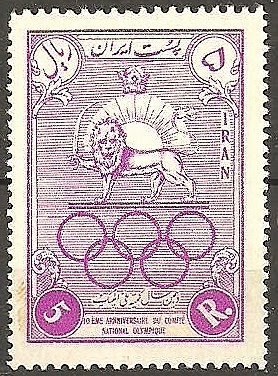
Stamp Investment Tip: Iran 1956 National Olympic Committee (Scott #1047)


  In 1956, Iran issued a stamp commemorating the tenth anniversary of the Iranian National Olympic Committee (Scott #1047). 30,000 were issued, and Scott '14 prices the unused stamp at $40.00.

  The stamp has additional appeal both a a Sports/Olympics topical and as an Animal topical, due to the Persian Lion and Sun emblem.

I believe that the stamp is undervalued due to the unpopularity of Iran's stamps, a consequence of its pariah status. Currently, Iranian stamps of the pre-revolutionary period are primarily of interest to collectors among the Iranians living abroad, a relatively affluent group, of whom there are about 1.3 million.
 
  Note that a common defect found on many Iranian stamps of the '50s is badly toned, "gloppy" gum. When purchasing #1047, endeavor to select examples with clean gum.

   Stamps of Iran are not widely collected at present, partly for political reasons and partly because of the ubiquity of fakes among the early overprinted issues. Nevertheless, it is an oil-rich nation (ranked second in both oil and natural gas reserves) of 76 million people, and there are signs that many of them are becoming fed up with the corrupt and reactionary theocracy that is isolating Iran from the rest of the world. Furthermore, it is beginning to diversify away from its dependence on oil into other industries, such as biotech, nanotech, and pharmaceuticals, and it has the potential to develop a thriving tourism sector, should it institute reforms and begin to improve its image.

Those interested in learning about investing in stamps should read the Guide to Philatelic Investing ($5), available on Kindle and easily accessible from any computer.   


Saturday, December 14, 2013

Stamp Investment Tip: Cuba 1930 Central American Games (Scott #299-303)

   In 1930, Cuba issued a set of five stamps celebrating the Central American Games (Scott #299-303). 50,000 sets were issued, and Scott '14 prices the unused set at $20.65 ( $32.50.- for NH) .

   The set has appeal as a Sports Topical, particularly to Latin American collectors who specialize in stamps honoring this regional competition.

As with most of Latin America, Cuba has issued many stamps which I feel are grossly undervalued. This set has wide appeal throughout Latin America, and should do very well, especially after Cuba rejoins the free world. Note that "gloppy" or toned gum are typical defects found on many of these sets, so select for those that have clean gum.
 
   I believe it inevitable that Cuba will join the fold of more-or-less free nations, and that tourism and trade will explode as a result. Currently, the average wage of each of the 11 1/2 million people living in this "socialist utopia" is under $20 per month, and GDP per capita is 107th in the world. Annual GDP growth has been high, averaging 6.4% over the last 5 years, but given the levels of corruption and favoritism shown to high ranking Communist Party members, it's an open question whether much of that new wealth has been filtering downward. Eventually, something will have to give. The current market for Cuban stamps, especially of the Pre-Castro Period, is bolstered by interest of stamp collectors within Cuban-American community, currently about 1.6 million strong, and far wealthier than their compatriots on the island. Interest in Cuban stamps is likely to increase, especially given the likely prospect of a replacement of the stale, "gerontocratic" regime within a decade or so.


"The Stamp Specialist" blog features my buy prices for stamps which I am interested in purchasing. I've posted a buy list for Cuba. Viewing dealers' buy lists every now and then is an excellent way to keep up with the vagaries of the stamp market.


Thursday, November 21, 2013

Stamp Investment Tip: Costa Rica 1960 Soccer (Scott #C283-88, C289)

  In 1960, Costa Rica issued a set of six stamps and a souvenir sheet honoring the 3rd Pan-American Soccer Championship (Scott #C283-88, C289). 25,000  of each were issued, and Scott '13 prices them unused at $4.90 and $ 6.50, respectively.

Aside from being yet another grossly undervalued Latin American issue, the set doubles as a Sports/Soccer Topical. Soccer is the most popular sport in the world, with a following of billions of fanatical fans, many of whom live in emerging market nations. Philatelic investors who focus on better Soccer topicals will certainly get more out of it than a kick in the shins.

A small nation of 4 1/2 million people, Costa Rica is unique as the only Latin American country to have escaped the plague of repressive dictatorships and oligarchies endemic to the region. Costa Rica has generally enjoyed greater peace and more consistent political stability than many of its fellow Latin American nations. The government offers generous tax exemptions to those investing in the country,and in recent times electronics, pharmaceuticals, financial outsourcing, software development, and ecotourism have become the prime industries in Costa Rica's economy. High levels of education among its residents make the country an attractive investing location. Annual GDP growth has averaged 3.4% over the last 5 years.


 "The Stamp Specialist" blog features my buy prices for stamps which I am interested in purchasing. I've posted a buy list for Costa Rica. Viewing dealers' buy lists every now and then is an excellent way to keep up with the vagaries of the stamp market.


Thursday, August 22, 2013

Stamp Investment Tip: Costa Rica 1946 Soccer Championship (Scott #C121-23)

   About 3 years ago, I recommended Costa Rica's    1941 Soccer Championship Issue (Scott #201-08/C57-66).  In 1946, Costa Rica issued an airmail set of similar design, but inscribed "Febrero 1946" (Scott #C121-23). 55,000 were issued, and Scott '13 prices the unused set at $ 6.00.


 I continue to view Soccer topical issues as the most compelling investments among Sports topical stamps. Soccer is the most popular sport in the world, with a following of billions of fanatical fans, many of whom live in emerging market nations. Philatelic investors who focus on better Soccer topicals will certainly get more out of it than a kick in the shins.

A small nation of 4 1/2 million people, Costa Rica is unique as the only Latin American country to have escaped the plague of repressive dictatorships and oligarchies endemic to the region. Costa Rica has generally enjoyed greater peace and more consistent political stability than many of its fellow Latin American nations. The government offers generous tax exemptions to those investing in the country,and in recent times electronics, pharmaceuticals, financial outsourcing, software development, and ecotourism have become the prime industries in Costa Rica's economy. High levels of education among its residents make the country an attractive investing location. Annual GDP growth has averaged 5.6% over the last 5 years.

 "The Stamp Specialist" blog features my buy prices for stamps which I am interested in purchasing. I've  posted a buy list for Costa Rica, including the set recommended in this article. Viewing dealers' buy lists every now and then is an excellent way to keep current on the vagaries of the stamp market.


Friday, July 5, 2013

Stamp Investment Tip: Azerbaijan 1994 Olympic Committee Centennial (Scott #474-76)


  In 1994, Azerbaijan issued a set of three stamps celebrating the centennial of the International Olympic Committee (Scott #474-76). 30,000 were issued, and Scott '13 prices the unused set at $3.00.
  
The set has obvious topical appeal for Sports/Olympics topicalists, as well as being an inexpensive bet on the growth of Azerbaijan's economy. Recommending it is consistent with my belief that one of the best ways to play the new and newly resurrected countries of Europe and Asia is to focus on popular topicals with low printings.

Azerbaijan is an oil-rich nation of about 9 million people, which also has significant reserves of natural gas and various minerals. Agriculture and tourism are also important to the Azerbaijani economy. The country shares all the problems of the former Soviet republics in making the transition from a command to a market economy, but its energy resources brighten its long-term prospects. It has begun making progress on economic reform, and old economic ties and structures are slowly being replaced. Annual GDP growth has averaged a stellar 16% over the last 5 years, largely based on the frenetic development of the country's oil wealth - an estimated 7 billion barrels of reserves.

Those interested in becoming part of an international community of stamp collectors, dealers, and investors are welcome to join the "Stampselectors"page at Facebook. The  page hosts lively discussions concerning stamp investment and practical aspects of collecting, and provide a useful venue for those who wish to buy, sell, or trade stamps.


Thursday, May 9, 2013

Stamp Investment Tip: Qatar 1964 Tokyo Olympics Overprint (Scott #37-41)

  In 1964, Qatar overprinted five stamps from its 1961 set, to honor Olympics held that year in Tokyo (Scott #37-41). 16,000 sets were issued, and Scott '13 prices the unused set at $56.50 .

   The set has dual market appeal among collectors of Qatar and Sports/Olympics topicalists. Note that although I often recommend buying scarce overprinted issues conditional on obtaining expertization, it's not necessary for this issue, which isn't significantly more valuable than the basic, non-overprinted stamps.

   With a population of 1.4 million, Qatar has experienced rapid economic growth over the last five years, with annual GDP growth averaging 9%. The country has 15 billion barrels of oil reserves and natural gas reserves estimated at between 80 trillion to 800 trillion cubic feet - enough energy reserves to make every Qatari a centimillionaire or billionaire. Gilding the gilded lily, Qatar is also funding the development of a "knowledge economy," establishing the Qatar Science and Technology Park and Education City. It has also established Doha Sports City, and plans to build an "entertainment city" in the future, in case Qataris become bored with their other leisure activities, such as collecting stamps.

   Those interested in being part of a community of stamp collectors, dealers, and investors are welcome to join the Facebook "Stampselectors" group, which currently has over 2,300 members.


Thursday, May 2, 2013

Stamp Investment Tip: Latvia 2002 Winter Olympics booklet (Scott #546a)


In 2002, Latvia issued a stamp honoring the Winter Olympics stamp (Scott #546), along with a booklet (Scott #546a). Only 5,000 of the booklet were issued, and Scott '13 prices it unused at $15.00 .

The booklet has multiple market appeal among collector of Latvia, Baltic States, and Sports/Olympics. Demand is enhanced for all Baltic States material due to the tendency of collectors to focus on the region in general.


A nation of 2.2 million people, Latvia has diverse industries which include the production of synthetic fibers, agricultural machinery, fertilizers, radios, electronics, pharmaceuticals, processed foods, textiles, and timber. The centrally planned system of the Soviet period was replaced with a structure based on free-market principles. Riga, the capital, emerged as a regional financial and commercial center, which initially benefited the country but left it exposed to the worldwide economic tsunami which hit the banking sector in 2008. Until the onset of the global financial crisis, Latvia had the fastest growing economy in Europe. Over the last 5 years, annual GDP growth has been flat, reflecting a 4.6% contraction in 2008 and an 18% disembowelment in 2009. Over the last four years, the economy has begun to recover.

Those interested in becoming part of a community of stamp collectors, dealers, and investors are welcome to join the Facebook "Stampselectors" group, which currently has over 1,600 members.


Sunday, December 30, 2012

Stamp Investment Tip: Uzbekistan 2004 Summer Olympics Souvenir Sheet (Scott #387)


In 2004, Uzbekistan issued a souvenir sheet celebrating the Summer Olympics (Scott #387). Only 20,000 were issued, and Scott '13 prices it unused at $3.00.


The sheet makes an interesting and low-risk speculation based on its appeal as a Sports/Olympics topical, and as a bet on the economic growth of Uzbekistan and the development of a stamp market there. This recommendation is consistent with my belief that one of the best ways to play the new and newly resurrected countries of Europe and Asia is to focus on popular topicals with low printings.

A nation of about 28 million, Uzbekistan relies mainly on the production or extraction of commodities, including cotton, gold, uranium, potassium, and natural gas. The government is slowly relaxing state control of the economy, although it remains hostile to allowing the development of a significant private sector. Average annual GDP growth has been outstanding, averaging 8% over the last 5 years. However, average income has remained low, at around $610 per year (2006), largely due to the fact that much of the country's prosperity has benefited a tiny ruling elite of corrupt bureaucrats. Reforms are obviously necessary, although given the country's abysmal human rights record, the road to change will probably be a bumpy one.

Those interested in becoming part of an international community of stamp collectors, dealers, and investors are welcome to join the "Stampselectors" group at Facebook. The group hosts lively discussions concerning stamp investment and practical aspects of collecting, as is also an excellent venue for those who wish to buy, sell, or trade stamps. 


Saturday, December 31, 2011

Stamp Investment Tip: Azerbaijan 2001 Olympic Medalists Souvenir Sheet (Scott #713)

In January of 2001, Azerbaijan issued a flashy souvenir sheet honoring the Azerbaijani Olympic medalists of the Sydney, Australia Olympics of the previous year (Scott #713). 25,000 were issued, and Scott '12 prices the unused souvenir sheet at $5.75.

The sheet has obvious topical appeal for Sports and Olympics collectors, as well as being an inexpensive bet on the growth of Azerbaijan's economy. Recommending it is consistent with my belief that one of the best ways to play the new and newly resurrected countries of Europe and Asia is to focus on popular topicals with low printings.

Azerbaijan is an oil-rich nation of about 9 million people, which also has significant reserves of natural gas and various minerals. Agriculture and tourism are also important to the Azerbaijani economy. The country shares all the problems of the former Soviet republics in making the transition from a command to a market economy, but its energy resources brighten its long-term prospects. It has begun making progress on economic reform, and old economic ties and structures are slowly being replaced. Annual GDP growth has averaged a stellar 16% over the last 5 years, largely based on the frenetic development of the country's oil wealth - an estimated 7 billion barrels of reserves.


Saturday, November 26, 2011

Stamp Investment Tip: Venezuela 1951 Third Bolivarian Games Souvenir Sheet (Scott #C337a)

In 1951, Venezuela issued a souvenir sheet celebrating the Third Bolivarian Games (Scott #C337a). The Bolivarian Games are a regional multi-sport event held in honor of Simón Bolívar, and open to athletes from Bolivia, Colombia, Ecuador, Panama, Peru and Venezuela. 20,000 of the souvenir sheet were issued, and Scott '12 prices it unused at $20.00.

Aside from its appeal to collectors of Venezuela and Latin America in general, the souvenir should also do well as a Sports topical. The sheet is large and was issued on thin paper, so when purchasing it, ascertain that is free of bends and creases.


With a population of about 26 million, Venezuela is resource-rich, and consistently ranks among the top ten oil producers in the world. Annual GDP growth has averaged almost 10% over the last 5 years, although it has been decelerating recently due to lower oil prices. Under Chavez-style quasi-socialism, the percentage of Venezuelans living below the poverty line has decreased from 48% in 2002 to 30% in 2006. The country has begun diversifying its economy away from its current near-total dependence on petroleum exports, and has spawned a rapidly growing manufacturing sector.

I have begun a new blog, "The Stamp Specialist", featuring my buy lists for stamps which I wish to purchase, including many items from Venezuela .Periodically viewing dealers' buy lists
is an excellent way to remained informed about the state of the stamp market.


Those interested in joining a community of stamp investors are welcome to join the "Stampselectors" group on Facebook. The group provides a valuable forum for those who wish discuss this blog, as well as trade or communicate with stamp collectors, dealers, and investors from all over the world.


Saturday, October 22, 2011

Stamp Investment Tip: Indonesia 1988 Summer Olympics Souvenir Sheets (Scott #1354a-55a)


In 1988, Indonesia issued a pair of souvenir sheets celebrating the Summer Olympics (Scott #1354a-55a). Only 20,000 sets were issued, and Scott '11 prices them unused at $45.00 . Olympics issues are among the most popular Sports topicals, so demand for these souvenir sheets should continue to increase on that basis alone.


A recent Price, Waterhouse, Coopers report projects that Indonesia will be one of the world's fastest growing economies over the next forty years. Should this prove accurate, and should a burgeoning Indonesian middle class provide a base for a developing stamp market, then it is likely that the values of the country's better modern souvenir sheets will increase many-fold.


Indonesia is a rapidly developing, though still poor, country of 230 million people, with an annual GDP growth rate hovering around 5%-6%. It is the largest economy in Southeast Asia. While the manufacturing and service sectors are growing rapidly, agriculture still employs more of the working population than either. The country has extensive natural resources, including crude oil, natural gas, tin, copper, and gold. Its major export commodities include oil and gas, electrical appliances, plywood, rubber, and textiles. Like most emerging market nations, Indonesia faces challenges which will have to be addressed, including corruption and major inequities in the distribution of income.


Saturday, October 8, 2011

Stamp Investment Tip: Honduras 1964 Olympics (C336-44, C344 Note)


In 1964, Honduras issued a set of airmail stamps and two souvenir sheets honoring the Olympics (Scott #C336-44,C344Note,C344 2nd Note ). 20,000 sets and 5,000 of each souvenir sheet were issued, and Scott '11 prices them unused at $12.55, $40.00,and $50.00, respectively. Also, a small portion of the sets were overprinted for Official Use (Scott #CO111-19; CV = $25.25). The sets and souvenir sheets have worldwide appeal as Olympics/Sports topicals.


Honduras is a nation of about 7 1/2 million people, which has recently undergone a coup d'etat and constitutional crisis which threatened a reversion to dictatorship. The economy, which is largely dependent on agriculture and mining, has continued to grow, but the distribution of wealth remains very polarized, with average wages remaining low. 50% of the population still remains below the poverty line. Annual GDP growth has averaged 3.5% over the last five years, reflecting a 3% contraction in 2010 due to the reverberations of the global financial crisis.

I have begun a new blog, "The Stamp Specialist", which will feature wholesale buy prices for stamps which I am interested in purchasing. I've just posted a buy list for the Honduras. Viewing dealers' buy lists every now and then is an excellent way to keep current on the vagaries of the stamp market.

Sunday, September 25, 2011

Stamp Investment Tip: Colombia 1935 National Olympics Issue (Scott #421-36)

In 1935, Colombia issued a set of stamps honoring its National Olympics (Scott #421-36). Only 3,000 were issued, and Scott '12 prices the unused set at $1,350.00. As is often the case, the key stamp in the set is the 10p High Value (#436; CV = $550.00), which is worth purchasing alone if one can't locate an entire set.

The set has worldwide appeal to Sports Topicalists, and should also benefit from the long-term stealth bull market for better Latin American stamps.

A nation of 45 million people, Colombia has been plagued by decades of serious internal armed conflict, drug trafficking, corruption, and gross inequities of income, but has nevertheless racked up impressive annual GDP growth averaging 5.5% over the last 5 years. Moreover, until the global financial fiasco cut its GDP growth to 3% in 2009, it had been steadily accelerating, from 2% in 2003 to 8% in 2008. Recently, the government, armed to the teeth by the U.S., has applied a dual policy of combining military pressure with negotiations to cope with the various guerrilla factions within the country. This seems to have worked to some extent, as the number of insurgents has been halved, and the number of homicides and kidnappings drastically reduced. While some argue that the Colombian government is still utterly corrupt, and has violated human rights and supported paramilitary death squads in order to achieve relative peace, it may be that this is par for the course, given the nation's history. The main challenge that the country faces will be that of sharing more of the wealth with the majority of the population so as to develop more of a middle class and political center. Otherwise, it will devolve into an unstable mess.

Those interested in becoming part of an international community of stamp collectors, dealers, and investors are welcome to join the "Stampselectors" group and organization pages at Facebook. These host lively discussions concerning stamp investment and practical aspects of collecting, and are excellent venues for those who wish to buy, sell, or trade stamps.

Also, those interested in learning more about investing in stamps may wish to view my new book, A Guide to Philatelic Investing (available on Kindle, but easily accessed w/any pc; digital list price = $5).


Saturday, May 7, 2011

Stamp Investment Tip: Bulgaria 1935 Balkan Soccer Tournament (Scott #267-72)

In 1935, Bulgaria issued a set of six stamps commemorating the 5th Balkan Soccer Tournament (Scott #267-72). Only 7,000 sets were issued, and Scott '11 prices the unused set at $ 326.-.


Soccer is the most popular sport in the world, with a following of billions of fanatical fans, many of whom live in emerging market nations. Philatelic investors who focus on better Soccer topicals will certainly get more out of it than a kick in the shins.


Since the fall of communism, Bulgaria, with a population of about 7.6 million, has experienced rapid economic growth, although its GDP per capita is only about $13,000, about 40% of the European Union average. It has an industrialized, open free-market economy, with a large, moderately advanced private sector and a number of strategic state-owned enterprises. The World Bank classifies it as an "upper-middle-income economy." Tourism is a steadily growing, and the country also benefits from rich natural resources, a highly educated population and an export-oriented agricultural sector. Annual GDP growth has averaged 2.5% over the last 5 years, reflecting a recent major contraction due to the European debt mess.

Tuesday, March 29, 2011

Stamp Investment Tip: Austria 1933 Ski Federation (Scott #B106-09)


In 1933, Austria issued a set of four semi-postals celebrating the meeting of the International Ski Federation (Scott #B106-09). 50,000 were issued, and Scott '11 prices the unused set at $169.00 ($500.- for NH) .


I view this set as a conservative investment, with dual market appeal among collectors of Austria and Sports Topicals. It should do well over the long haul as Austria's economy and stamp collecting population grows. The global aging trend should boost the number of serious Austrian philatelists, as the proportion of Austrians over 60 is projected to grow from 20.7% in 2000 to 33% in 2025, and 41% in 2050, according to a UN Report on Global Aging.


Austria, a nation of 8.3 million people, is one of the 12 richest countries in the world in terms of GDP per capita, with a well-developed social market economy and a high standard of living. Alongside its highly developed industries, international tourism is the most important part of the national economy. Germany has historically been the main trading partner of Austria, making it vulnerable to rapid changes in the German economy. However, since Austria became a member state of the European Union it has gained closer ties to other European Union economies, reducing its economic dependence on Germany. In addition, membership in the EU has drawn an influx of foreign investors attracted by Austria's access to the single European market and proximity to the emerging economies of the European Union. Annual GDP growth has averaged 1.5% over the past 5 years, reflecting a recent contraction due to the global financial crisis.